
What Makes You a Good Candidate for Solo?
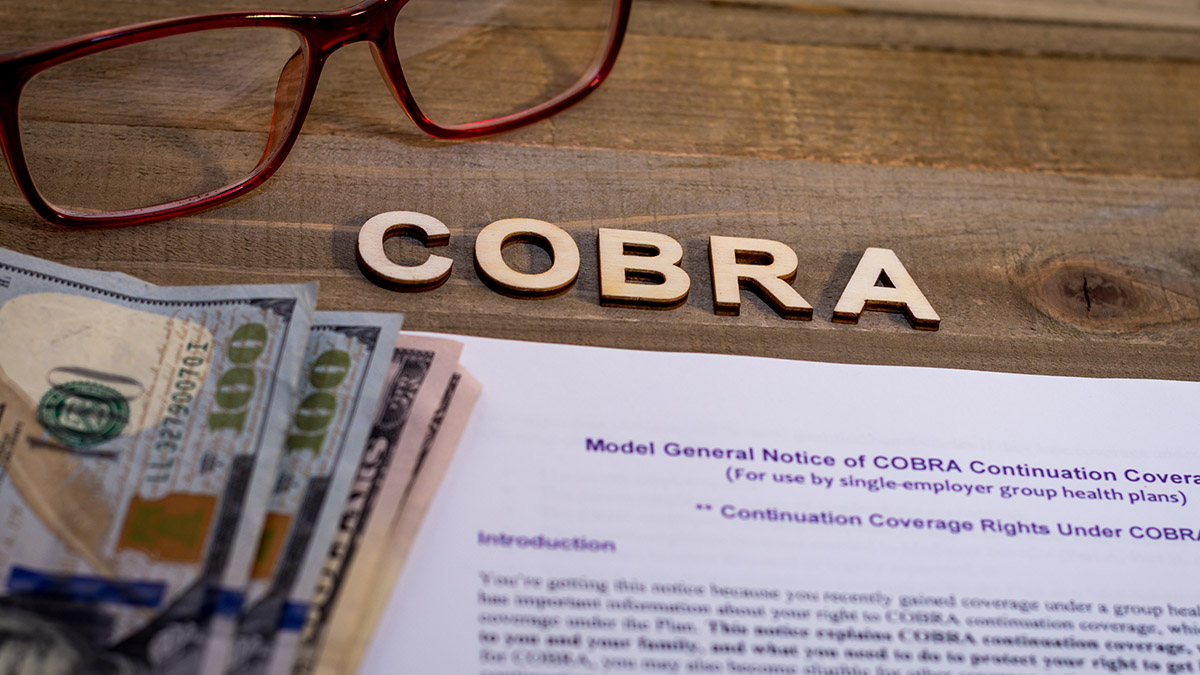
COBRA continuation coverage lets you stay on your former employer’s health insurance plan for up to 18 months after leaving a W-2 job, but you pay the full premium plus a 2% administrative fee — typically two to three times what you paid as an employee. For self-employed business owners, alternatives like ACA marketplace plans, a spouse’s employer plan, or captive group plans built for the self-employed often work better both financially and structurally.
How COBRA Continuation Coverage Actually Works
COBRA continuation coverage — the Consolidated Omnibus Budget Reconciliation Act — is a federal law that lets you choose to continue your former employer’s group health plan after qualifying events like job loss, reduced hours, or divorce. In most cases coverage runs up to 18 months, with extensions in specific circumstances — up to 29 months for disability and up to 36 months for events like the death of the covered employee, divorce, or a dependent child losing dependent status.
If you elect COBRA, nothing about your coverage changes. Same plan, same insurance company, same network, same prescription drug formulary, same providers. There is no health questionnaire and no waiting period for preexisting conditions. You also get a 60-day election window from the date your COBRA election notice arrives — and election is retroactive, so if you don’t need medical care during those 60 days, you can wait and decide later.
That continuity is the reason COBRA still makes sense for some people. The cost is the reason most self-employed business owners look elsewhere.
The True Cost of COBRA vs. What You Paid as an Employee
Most people don’t understand the true cost of COBRA until they open the election notice. Under federal law, your former employer can charge the full premium plus a 2% administrative fee — both the employer portion and the employee portion of the health insurance plan.
When you had employer coverage, your paycheck deduction usually represented only 20–30% of the actual cost. Your employer was covering the other 70–80% as part of your benefits package. Under COBRA, all of that out-of-pocket exposure lands on you.
A practical example: if your paycheck deduction was $250 a month for family coverage, the full premium the insurer was billing your employer may have been roughly $1,000 to $1,250 — and your COBRA bill would be that full amount plus the 2% administrative fee. That isn’t a higher premium — it’s the actual cost of the coverage that was always there.
Self-Employed Health Insurance Alternatives to COBRA
Losing job-based coverage is one of the qualifying events that triggers a Special Enrollment Period for the Affordable Care Act marketplace, giving you 60 days to enroll in a marketplace plan without waiting for the open enrollment period. Voluntarily canceling existing marketplace coverage mid-year does not trigger an SEP — only loss of qualifying job-based coverage does.
For self-employed business owners, the alternatives generally come down to four:
- ACA marketplace plans (individual health insurance) — Available through the health insurance marketplaces. Cover preexisting conditions regardless of health status. The premium tax credit is available if household income and household size meet the subsidy threshold; those above the threshold pay the full unsubsidized premium, which can run higher than COBRA.
- A spouse’s employer plan — Job loss is a qualifying event that allows enrollment in a spouse’s employer’s plan outside open enrollment. Often the lowest-cost option when a family member has access.
- Short-term private health insurance — Lower monthly cost, but typically excludes preexisting conditions and offers limited benefits. Best treated as a gap-filler, not a long-term solution.
- Captive group plans for the self-employed — Self-funded major medical coverage structured for sole proprietors, LLC owners, and independent contractors with an active federal EIN.
How to Decide Between COBRA and an Alternative Plan
The decision usually comes down to four questions: What are your real monthly medical costs? How long do you actually need coverage? Are you mid-treatment with a specific provider relationship? And does your household have a path through a family member’s plan?
If you are healthy, expect to be self-employed for more than 18 months, and have a clean medical history, the alternatives usually win on cost. If you are undergoing treatment or anticipate a planned procedure tied to a specific provider, COBRA’s no-questionnaire continuity may be worth the higher premiums for the duration of that care. A medical emergency is covered under any of these options — that distinction matters most for ongoing, scheduled care.
| Consideration | COBRA | ACA Marketplace | Captive Group Plan (Solo) |
|---|---|---|---|
| Monthly cost | Full premium + 2% admin fee | Varies by income; full sticker above subsidy threshold | Set by plan design, age, and household |
| Coverage continuity | Same plan, same network | New plan, may differ | New plan, PHCS PPO nationwide |
| Enrollment timing | 60-day election window | Within 60 days of job loss (SEP) | Year-round |
| Duration limit | Up to 18 months | Renewable annually | No lock-in, cancel any time |
| Health questionnaire | None | None | Required |
| Eligibility | Recent employer coverage | Most U.S. residents | Active federal EIN |
The Captive Group Plan Option for Self-Employed Business Owners
Solo Health Collective is a self-funded health plan structured as a captive group plan, built for self-employed business owners with an active federal EIN — approval is contingent on completion of a health questionnaire. Members access the Multiplan PHCS PPO network (1.4 million+ providers across all 50 states) and choose from three plan designs by deductible amount: the $2,500 deductible plan, the $5,000 deductible plan, and the $10,000 deductible plan. The $2,500 and $5,000 deductible plans use a high-deductible structure that may be compatible with a Health Savings Account — confirm with your HSA provider and tax advisor. Coverage is administered by Vault Admin Services, with reinsurance through Odyssey Re (A+ rated).
Making the Decision
COBRA isn’t always the wrong answer — it is the right answer in specific situations, including active medical treatment, an upcoming surgery, or a coverage gap of fewer than 18 months. For most healthy self-employed business owners, however, the cost difference is large enough that the alternatives deserve a serious look.
If you have an active federal EIN and want to compare a captive group plan to your COBRA premium, calculate your cost at hbgsolo.com. Year-round enrollment means there’s no 60-day clock to beat.
This article is for educational purposes only and does not constitute legal, tax, or medical advice. Solo Health Collective is a self-funded health plan, not insurance. Coverage is provided through Vault Health Captive – Series C, regulated by the North Carolina Department of Insurance and reinsured by Odyssey Re. Coverage availability is subject to health questionnaire approval. Consult a qualified tax or legal professional for guidance specific to your situation.
Health Coverage for Solopreneurs
The day you went self-employed, the health insurance system stopped making sense. Every guide says 'check the marketplace.' That works if you...
What Is a Captive Group Health Plan
A captive group health plan is a self-funded health coverage arrangement in which participating businesses pool contributions inside a regulated...
ACA Subsidy Cliff 2026: Real Alternatives for Self-Employed
If you earn above the ACA (Affordable Care Act) subsidy threshold — roughly $62,600 in annual income for a single filer in 2026 — premium tax...
Self-Employed Health Insurance Options
Going self-employed feels liberating until you realize the health insurance system wasn't built for you. Every guide says "check the marketplace."...
Health Insurance With No Open Enrollment Period
Yes — captive group health plans like Solo Health Collective accept enrollment year-round, with no open enrollment window and no qualifying life...
Can Sole Proprietors Get Group Health Insurance
Sole proprietors can't qualify for traditional small-group health insurance without a W-2 common-law employee — but they can join a captive group...
Frequently Asked Questions
How much does COBRA cost compared to what I paid as an employee?
COBRA premiums are typically two to three times what you paid as an employee. When you had a former employer’s plan, your paycheck deduction reflected only the employee portion — usually 20–30% of the total cost — while your employer covered the rest. COBRA lets your former employer charge the full premium plus a 2% administrative fee, so the entire cost of the health coverage falls on you. To estimate your COBRA premium, look at your most recent W-2 or HR portal for the total cost of your coverage and add 2%.
How long do I have to decide whether to elect COBRA?
You have 60 days from the date you receive your COBRA election notice to choose COBRA. Election is retroactive within that window — if you don’t need medical care during the 60 days, you can wait and decide later without losing the option. If you do need care during the election window, you can elect at that point and your coverage will be backdated. This makes COBRA useful as a fallback even if you plan to enroll in something else.
What are my alternatives to COBRA if I'm self-employed?
The main alternatives are an ACA marketplace plan (job loss triggers a Special Enrollment Period), enrollment in a spouse’s employer plan if available, a short-term plan as a gap-filler, or a captive group plan built for the self-employed. Marketplace plans cover preexisting conditions but carry higher premiums above the subsidy threshold. A spouse’s employer plan is often cheapest when a family member has access. Captive group plans like Solo Health Collective require a health questionnaire but offer year-round enrollment with no 60-day clock.
Can I get an ACA marketplace plan after leaving my job instead of COBRA?
Yes. Losing job-based coverage is a qualifying event that triggers a Special Enrollment Period, giving you 60 days from the date your coverage ends to enroll in a marketplace plan outside the standard open enrollment period. Voluntarily declining COBRA does not disqualify you from this SEP — the qualifying event is the loss of employer coverage itself. Voluntarily canceling existing ACA coverage mid-year, however, does not trigger an SEP.
Are COBRA premiums tax deductible if I'm self-employed?
The tax treatment of COBRA premiums for self-employed individuals depends on specific circumstances — including whether the plan can be considered established under your business. Confirm with your tax advisor whether your situation qualifies for the self-employed health insurance deduction or whether your COBRA premiums would be deductible as itemized medical expenses.”